
A is for Airway – What Every LNC Should Know About Neonatal Resuscitation
by
Kathy Chamberlain, DNP, NNP-BC, C-ELBW
(Sources for this article are included in the Sidebar.)
What is the Neonatal Resuscitation Program (NRP)?
According to the Textbook of Neonatal Resuscitation (2021), NRP started in 1987 and has become the standard educational program for training healthcare professionals in the resuscitation of newborns. The resuscitation guidelines are determined by a committee with the International Liaison Committee on Resuscitation (ILCOR), the American Academy of Pediatrics (AAP) and American Heart Association (AHA) who partner with resuscitation councils around the world to review current research and practices. This NRP steering committee revises the guidelines every five years to ensure evidence based practices.
Recognizing that knowledge alone is not enough to provide quality resuscitation, NRP added simulation training in the 6th edition of the textbook. Simulation provides hands-on practice with the recommendation of videotaping the scenarios to debrief the team’s performance during the resuscitation. The goal of simulation training is to improve skills, teamwork, and communication to reduce errors and improve patient outcomes.
The Importance of NRP
Neonatal morbidity and mortality remains a significant concern in the United States (U.S.). In 2023, the Perinatal Death Rate, which is defined as infants less than 7 days of age and born at greater than 20 weeks gestation, was 8.36 per 1,000 live births (Valenzuela, Gregory, & Martin, 2025). The birth rate in the U.S. was over three million babies in 2023 (National Center for Health Statistics, 2025). This calculates to over 25,000 neonatal deaths per year in the U.S.
While some of these deaths can be attributed to preterm deliveries, term infants may also require resuscitation. Five percent of term infants will require positive pressure ventilation (PPV) to support ineffective breathing, two percent will require intubation, and up to 3 babies per 1,000 live births receive chest compressions or emergency medication (Textbook of Neonatal Resuscitation, 2021). Therefore, based on the 2023 birth rates, approximately 9,000 infants will require advanced resuscitation per year. Neonatal morbidity and mortality is devastating to families and costly for healthcare.
NPR Overview
There are specific guidelines to define the presence of healthcare professionals at deliveries. The number of providers is determined by the risk factors identified for each newborn delivery. According to NRP, every birth should have one qualified provider who is solely responsible for the baby (Textbook of Neonatal Resuscitation, 2021). Deliveries which include any risk factors should have a minimum of two providers trained to initiate resuscitation. For preterm babies, birth defects, and other maternal risk factors, a full resuscitation team should be present at the delivery. A fully qualified team who are able to provide advanced resuscitation should be identified and all equipment should be available for every delivery if needed. The NRP algorithm (Figure 1) shows the rapid succession of evaluations and interventions to be provided during neonatal resuscitation. While these steps need to be performed in a timely manner, each step must be completed prior to moving to the next step.
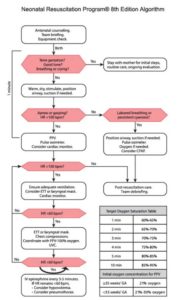
Figure 1. NRP Algorithm (Textbook of Neonatal Resuscitation, 2021)
The first noticeable difference between neonatal resuscitation and adult resuscitation is the cause. Neonatal resuscitation is typically needed for respiratory failure. The first steps in NRP are to warm, dry, stimulate and clear the baby’s airway. The second step is to assess breathing and provide respiratory support if needed.
The second noticeable difference is oxygen saturation requirements. On the algorithm, NRP provides a recommended oxygen saturation chart to guide oxygen delivery needs during resuscitation (Figure 1). Oxygen saturation in utero is approximately 60% and it may take up to 10 minutes for a healthy newborn to reach saturations above 90% (Textbook of Neonatal Resuscitation, 2021). It is an expected outcome to see low oxygen saturation levels as a baby transitions to extrauterine life.
ERRORS MADE DURING NEONATAL RESUSCITATION
Despite the detailed NRP guidelines and algorithm, errors still occur during resuscitations. Factors that can lead to errors include:
- Lack of adequate staffing
- Lack of staff experience in resuscitation
- Equipment malfunction
- Communication breakdown
- Hospital system failures
Studies have been done to assess for errors in neonatal resuscitation. Two studies used videotaping of resuscitations in real time to evaluate for deviations from the NRP guidelines. In one study, fifty-four percent of the resuscitations had deviations from the NRP guidelines (Carbine, Finer, Knodel, & Rich, 2000). Another study reviewed 23 resuscitations with 780 specific tasks, in which 194 were done incorrectly: a 23% error rate (Yamada, Yaeger, & Halamek, 2015). Of the errors identified in this study, many were repetitive with the potential to cause harm, such as failure to assess heart rate and/or breathing, inadequate positive pressure ventilation, and improper technique during chest compressions.
Research has been done to identify methods to reduce errors during NRP. One study demonstrated that the used of a recorder/timer reduced errors and delays in interventions (Neveln, Khattab, Hagan, Fortunov, & Sundgren, 2023). This timekeeper is “hands-off” and not responsible for any other skill in order to maintain focus on the timing of interventions.
Simulation during NRP and in the two year interval between recertification can also reduce errors (Garvey & Dempsey, 2020). Simulation is a safe place to train and practice physical and communication skills without the risk of patient harm. Scenarios are developed to mimic real life resuscitations. This allows healthcare professionals to learn and repeat in a safe environment and increase the retention of the skills demonstrated during NRP (Garvey & Dempsey, 2020).
POSSIBLE BREACHES IN STANDARD OF CARE
Duty: Per NRP guidelines, every delivery should have a healthcare professional who is solely dedicated to supporting the baby. That person should be trained and qualified to begin resuscitation if necessary. Deliveries of preterm babies or with certain perinatal risk factors may require a full team to perform advanced resuscitation. These providers should be trained and current in NRP.
Breach: Hospitals and other facilities who offer labor and delivery should meet the NRP guidelines for staff presence at each delivery. Staff who work directly with the babies should be trained and current in NRP. Possible breaches may include medical negligence by the staff caring for the baby or by the hospital. However, there are revisions to the NRP textbook every five years, so care should be taken to ensure the correct SOC is defined when assessing a case for negligence.
Causation: Delays in or inadequate resuscitation can lead to lifelong disability or death. While most babies transition to extrauterine life spontaneously or with minimal assistance, the rest require timely and effective resuscitation. Delayed or ineffective resuscitation can cause oxygen deprivation, poor circulation, decreased blood flow to the brain, and respiratory or metabolic acidosis.
Damages: Effects of low oxygen, poor circulation, and acidosis may lead to Birth Asphyxia, Hypoxic Ischemic Encephalopathy (HIE), Cerebral Palsy (CP), or death. In addition to the health of the child, there is a significant financial burden on family due to hospital bills, long-term care needs, and loss of income to care for child. Significant emotional damages for family may include Intensive Care Nursery hospitalization, loss of healthy child, or death of a child.
Common medical negligence themes:
- Failure to recognize distress
- Delay in resuscitation
- Delay in intubation
- Improper ventilation
- Inadequate monitoring
- Deviations from NRP guidelines
- Intubation errors
KEY TAKE AWAYS
Neonatal resuscitation is almost always an issue of respiratory failure and supporting breathing is in the first steps of NRP. That is why A is for airway and B is for breathing for babies. As babies transition to extrauterine life, their oxygen saturations are lower than 90%. They are moving from an environment with saturations at 60% and may take up to 10 minutes to reach 90%.
NRP is revised every five years. Be cautious that the correct edition of the textbook is defining the SOC. For example, the 2020 guidelines were published in 2021 as the 8th edition and the 2025 guidelines will be published in 2026 as the 9th edition. The edition that is in effect during the time of the resuscitation is the SOC for the case.
Nurses, physicians, and respiratory therapists are responsible for maintaining their NRP certification and ensuring they are practicing to the current guidelines. Hospitals are responsible for ensuring adequate, qualified staff to attend any newborn delivery. At minimum, they should maintain records of the staff’s NRP certification. Ideally, they should have a simulation program which includes regular mock codes to enhance the staff’s retention of the NRP guidelines.
(Sources for this article are included in the Side Bar.)
Author: Kathy Chamberlain, DNP, NNP-BC, C-ELBW
KChamberlain Consulting, LLC
Email: kathy@kchamberlain.org
Contact: 925-335-6997
_________________________________________________________________________________
CHAPTER MEMBER HIGHLIGHT
VON-NICA JOHNSON, MSN, APRN, CNM, C-EFM, CLNC

Von-Nica is the Founder and Lead Nurse Consultant at Walker Johnson Legal Nursing Consulting (WJCLNC). A board-certified Advanced Practice Registered Nurse and Certified Nurse Midwife with over two decades of clinical experience, Von-Nica has provided comprehensive care to women across the lifespan in both obstetrics and gynecology. Her work spans diverse clinical settings, including hospitalist programs, high acuity labor and delivery units, and private practice environments serving both urban and rural communities. In addition to her extensive clinical background, Von-Nica holds certification in Electronic Fetal Monitoring (C-EFM), a credential that underscores her ability to interpret complex maternal fetal patterns, skills that are invaluable in evaluating standards of care, decision making, and timeliness of interventions in birth injury and obstetrical litigation.
In 2024, Von-Nica launched Walker Johnson Legal Nursing Consulting, PLLC, to bridge clinical expertise with the legal process. She partners with attorneys handling medical malpractice and personal injury cases, providing in depth medical record analysis, case screening, and expert interpretation of obstetric and gynecologic issues. Her unique dual perspective as both a clinician and consultant allows her to identify subtle deviations in care, clarify causation, and strengthen case strategy.
Von-Nica is a member of the American Association of Legal Nurse Consultants and an active member of several regional chapters, demonstrating leadership and a continued commitment to advancing the field of legal nurse consulting.
She welcomes connection and can be reached at von-nica@wjclnc.com or 901.657.9944
_______________________________________________________________________________

ABOUT THE GREATER ORLANDO CHAPTER OF AALNC
The American Association of Legal Nurse Consultants (AALNC) was founded in 1989, as a not for profit membership organization dedicated to the professional enhancement and growth of registered nurses practicing in the specialty of legal nurse consulting. Chapter development quickly followed. The Orlando community was rich with nurses already practicing in the field of legal nursing. This group of committed professionals quickly became members of the new national organization and recognized the need for a local chapter. The Greater Orlando Chapter of AALNC, founded in 1990, was the second chapter formed under the new national organization. The Chapter was begun in support of AALNC’s mission, by providing networking opportunities, mentoring and support to nurses through professional development and education – a mission that continues today.
______________________________________________________________
MEET THE 2025 GREATER ORLANDO CHAPTER OFFICERS & DIRECTORS

President: Robin Axtell, BSN, RN, LNCC
President Elect: Michelle Gaines, MNA, RN, CRNA
Immediate Past President: Tory Palivoda, BS, RN, LNCC
Secretary: Patty Mitchell, BSN, RN, CLNC
Treasurer: Jillian Talento, BSN, RN, CEN, LNCC
DAL: Pamela Borello, BSN, RN, CNOR, CNAMB, CSSM(e)
DAL: Jill Campbell, BSN, RN, CPTC
DAL: Christine Dorman, DNP, APRN, ACNP-BC, CCRN
DAL: Jenelle Lea, MBA, BSN, RN, CEN, GFN-C
DAL: Lori Mollman, MBA, BSN, RN
CONNECT WITH US
Connect with us on LinkedIn
Check us out at: https://orlandoaalnc.org
Contact us at: info@orlandoaalnc.org

Resources for “A is for Airway – What Every LNC Should Know About Neonatal Resuscitation:
1. Carbine, D.N., Finer, N.N., Knodel, E., & Rich, W. (2000, Oct). Video Recording as a Means of Evaluating Neonatal Resuscitation Performance. Pediatrics, 106(4), 654-658. Retrieved from https://publications.aap.org/pediatrics/article-abstract/106/4/654/65773/Video-Recording-as-a-Means-of-Evaluating-Neonatal
2. Garvey, A.A., & Dempsey, E.M. (2020, Feb). Simulation in Neonatal Resuscitation. Frontiers in Pediatrisc, 8. Retrieved from https://www.frontiersin.org/journals/pediatrics/articles/10.3389/fped.2020.00059/full
3. National Center for Health Statistics. (2025). Births and Natality. FastStats. Retrieved from https://www.cdc.gov/nchs/fastats/births.htm
4. Neveln, N.K., Khattab, M., Hagan, J.L., Fortunov, R.M., & Sundgren, M.C. (2023, Sept). A recorder/time coach decreases time errors during neonatal resuscitation: A randomized, simulation-based clinical trial. Resuscitation Plus, 15.Retrieved from https://www.sciencedirect.com/science/article/pii/S2666520423000541
5. Textbook of Neonatal Resuscitation (8th ed.). (2021). American Academy of Pediatrics.
6. Valenzuela, C.P., Gregory, E.C., & Martin, J.A. (2025). Perinatal Mortality in the United States, 2022 and 2023. MCHS Data Brief. Retrieved from https://www.cdc.gov/nchs/products/databriefs/db530.htm
7. Yamada, N.K., Yaeger, K.A., & Halamek, L.P. (2015, Nov). Analysis and classification of errors made by teams during neonatal resuscitation. Resuscitation, 109-113. Retrieved from https://pubmed.ncbi.nlm.nih.gov/26282500/
__________________________________
CALENDAR OF EVENTS

Be sure to check out the AALNC calendar of events, which includes MANY events, presented by ALL of the AALNC Chapters and by AALNC! You can fill your calendars for the rest of 2025! And mark your calendars for the Greater Orlando Chapter Update and CE Webinar Dates for the remainder of 2025:
- January 20, 2026 – Annual Meeting and Officer Inauguration, PLUS CE Webinar, “How to Stay Healthy While Working on Cases, by Kristina Mew, BSN, RN, PHN, CCRN
- February 17, 2026 – Presentation on “Recognizing Impairment in the Workplace,” presented by Healthcare Addiction Expert, Jack Stem.
- March 11-13, 2026 – AALNC Annual Forum, Orlando, FL.
- April 21, 2026 – “Dysphagia, Swallowing Stages, Cognition, Dementia – Case Study”, presented by Elizabeth McKinley, MA, CCC/SLP.
- May 19, 2026 – Presentation on Transfer Centers or End of Life Directives, presented by Mathew Garvey, DNP, MBA, RN.
- June/July 2026 – SUMMER BREAK
Don’t forget our On-Demand Webinars. We have 22 On-Demand Webinars which are free for Chapter members and only $20 for non-Chapter members.
And check out the education programs from our fellow AALNC Chapters:
- Bay Area Chapter of Northern California at: https://www.bacnc.org/
- New Jersey Chapter at: https://aalncnjchapter.clubexpress.com/
- Pittsburgh Chapter at: https://aalncpittsburgh.org/
- Tampa Bay Chapter at: https://www.aalnctampa.com/
- Pacific Northwest Chapter at: https://www.pnw-aalnc.com/
CONTINUING EDUCATION INFO
The Greater Orlando Chapter of AALNC is an approved provider of Nursing CE through the Florida Board of Nursing and CE Broker, and approved by the following States: Arkansas, District of Columbia, Florida, Georgia, Kansas, Kentucky, Mississippi, New Mexico, South Carolina and West Virginia. We report CE directly to CE Broker in these states. For attendees from other States, we provide required documents for self-reporting CE to State Boards of Nursing.
____________________________________
LNC LAUNCHPAD – Q&A with Greater Orlando Chapter LNCs

In 2021 we started a new program for members, which we call “LNC Launchpad – Q&A with Greater Orlando Chapter LNCs.” This is a 1.5 hour session to provide guidance, answer questions, and suggestions. We limit the event to 10 participants, so we can mentor each attendee – whether new to the LNC practice or experienced and ready for a change – we are there for you! We completed our 2025 season in November. And below are the dates for 2026! Registration opens about 2 weeks before each session, so check our website often.
- February 10, 2026
- May 12, 2026
- September 8, 2026
- November 10, 2026
________________________________________

LNC Tips – EMAIL ETIQUETTE 101 – tips for the LNC
Transitioning from a clinical environment to the nuances of office decorum can be a challenging feat, particularly when navigating the intricacies of email communication. Below, you’ll find seven invaluable guidelines to bear in mind prior to clicking the “send” button.
Begin Each Email with a Greeting: Neglecting to include a salutation may inadvertently convey a sense of impatience or discourtesy to your recipient. This can be especially tricky when time is of the essence!
Embrace Politeness: Remember that your recipient might be grappling with their own set of challenges or difficulties. Don’t take their response, or lack thereof, personally. If a matter becomes personal, opt for a mature phone call to resolve it.
Clarity is Key: Craft a subject line that concisely conveys the nature of your message, which can include the relevant case or case number. For example “Case 1028 – Smith v Smith: Potential Neurology Experts.
Understand Your Audience: Tailor your tone to your audience. When communicating with individuals who may not be familiar with your sense of humor or tendencies toward sarcasm, it’s best to maintain a straightforward professional tone.
Be Mindful of Discoverability: Keep in mind that all expert correspondence is subject to discovery. If you wouldn’t want your words scrutinized during a deposition, think twice before putting them in writing.
Thorough Reading: Prior to responding, ensure that you’ve read the entire email. Rushed responses can lead to misunderstandings
or omissions.
Secure Medical Records: When sending medical records, prioritize security. Utilize encryption or platforms like Dropbox with password protection to safeguard sensitive information.
These seven pointers will not only enhance your email etiquette, but also promote effective and considerate communication in a professional setting.
Tips from Alyssa Brandeberry, RN, LNCC
If You Have Questions, Contact Us:
Email us at: info@orlandoaalnc.org
Or visit us at: https://orlandoaalnc.org
___________________________________
AALNC UPCOMING EVENTS YOU DON’T WANT TO MISS:

MARK YOUR CALENDARS NOW!
AALNC Annual Forum is going to be a live event again in 2026, and it will be in BEAUTIFUL Orlando! AALNC has partnered with AANLCP for what promises to be a Forum for the record books! Pre-Forum will include a Mock Trial, which is a great learning experience for all – the attendees AND the LNCs serving in the various roles!
For more information and to register, go to: https://www.aalnc.org/Events/AALNC-Annual-Forum
__________________________________