
EMERGENCY RESTERNOTOMY PREPAREDNESS ON THE CARDIAC UNIT
Clinical & Medical-Legal Considerations for LNCs
by
Kerri Chirchiglia, BSN, RN, BA
(Sources for this article are included in the Sidebar.)
INTRODUCTION
Patients recovering from open-heart surgery remain at risk for life-threatening complications even after transfer from the intensive care unit (ICU) to a progressive care or cardiac telemetry unit. Although these units are not ICU-level settings, they often provide care for patients within days of cardiothoracic surgery, when complications such as bleeding or cardiac tamponade may occur.
Some cardiac surgical programs maintain an “open chest cart” (also referred to as an emergency resternotomy cart) on designated cardiac units. While rarely used, its presence reflects preparedness for time-sensitive postoperative emergencies.
For Legal Nurse Consultants (LNCs), understanding the clinical context and documentation surrounding emergency resternotomy preparedness can be essential in reconstructing events in cases involving sudden deterioration or cardiac arrest following cardiac surgery. Postoperative arrests on step-down units often become focal points in malpractice litigation, making preparedness and documentation highly scrutinized. For LNCs, these cases often hinge on whether early warning signs were present, how escalation occurred, and whether institutional preparedness aligned with policy.
CLINICAL BACKGROUND: Post-Cardiothoracic Risk Outside the ICU
Common cardiothoracic procedures, including coronary artery bypass grafting (CABG), valve repair or replacement, and other open-heart surgeries, require close postoperative monitoring. After stabilization in the ICU, patients are often transferred to cardiac step-down units for continued recovery. Despite apparent improvement, early postoperative patients remain at risk for:
- Mediastinal bleeding
- Cardiac tamponade
- Hemodynamic instability
- Ventricular arrhythmias
- Sudden cardiac arrest
The early postoperative window, typically the first 24-72 hours, carries heightened risk for tamponade and surgical bleeding. These risks are well documented in cardiothoracic surgical literature and are reflected in institutional monitoring protocols. (1)
Cardiac Tamponade and Postoperative Arrest
Cardiac tamponade is a critical postoperative complication characterized by the accumulation of fluid or a clot in the pericardial space, impairing cardiac filling and causing obstructive shock. Clinical indicators may include:
- Hypotension
- Tachycardia
- Decreased chest tube output
- Elevated central venous pressure (if monitored)
- Sudden deterioration
- Pulseless electrical activity (PEA) arrest
From an LNC perspective, understanding this clinical context is essential when reviewing documentation in cases of early postoperative arrest. Cardiac tamponade or hypovolemia (bleeding) after cardiac surgery can delay appropriate cardiopulmonary resuscitation (CPR) due to lack of perfusion. In situations where external cardiac compression will be of no effect, emergent re-entry into the chest cavity needs to occur. The Society of Thoracic Surgeons (STS) goal is to perform an emergent re-entry sternotomy within five minutes. (2)
Cardiac Advanced Life Support (CALS)
The CALS protocol, a cardiopulmonary resuscitation method developed for CVICUs, is designed for use with any patient who has undergone cardiac surgery, excluding those who have had pulmonary surgery. The goal of CALS is to quickly correct any reversible causes of arrest, and if necessary, followed by immediate resternotomy performed by a trained physician. (3)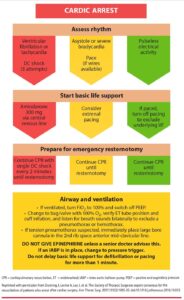
CODE BLUE ON THE CARDIAC UNIT: Clinical and Documentation Review
Chronological reconstruction often reveals whether deterioration was abrupt or progressive. In medical-legal cases involving postoperative cardiac arrest outside the ICU, LNCs may consider a structured review of:
1. Preceding Clinical Trends:
a. Vital sign progression
b. Chest tube output trends
c. Telemetry rhythm changes
d. Laboratory abnormalities
2. Escalation and Communication:
a. Time of provider notification
b. Rapid Response activation
c. Cardiothoracic surgeon involvement
d. Documentation of suspected tamponade or bleeding
3. Code Blue Documentation – Important elements may include:
a. Initial rhythm
b. Timing of interventions
c. Arrival of the surgical team
d. Consideration of reversible causes (Hs and Ts)
e. Any documentation referencing resternotomy consideration.
The absence of documentation regarding resternotomy does not suggest that it was clinically indicated; rather, it reflects what is recorded.
POLICY AND INSTITUTIONAL CONTEXT
Institutional policies vary regarding emergency resternotomy outside the ICU. For example, some facilities specify the post-surgery time window during which emergent re-entry may be considered, the requirement for cardiothoracic surgeon presence, and unit-level escalation protocols. In a medical-legal review, alignment between documented actions and institutional policy may be relevant. The LNC’s role remains descriptive and objective, identifying what the policies state and what the documentation reflects.
MAINTAINING OBJECTIVITY IN HIGH-ACUITY CASES
Cases involving sudden postoperative death can evoke retrospective assumptions. However, LNCs must maintain professional neutrality and focus the review on what was documented; the timing of deterioration; escalation actions recorded; interdisciplinary consistency; and policy context. Avoiding hindsight bias is particularly important in early postoperative cardiac cases, where clinical decision-making often occurs under time-sensitive conditions.
PREPARATION FOR EMERGENCY RESTERNOTOMY
Emergency resternotomy is required for 20% to 50% of cardiac arrests experienced after cardiac surgery, and it is a procedure that ideally should be performed as rapidly as possible using full aseptic technique. Two or three staff members should gown and glove and prepare for an emergency resternotomy as soon as a cardiac arrest is called. (2)
The first key factor in the successful treatment of a patient who arrests after cardiac surgery is frequent rehearsals by the staff, using a team approach. A second key factor is that the team has trained to enhance their ability to perform three sequential defibrillations before external cardiac chest compressions are performed. A third key factor is the team’s ability to respond to post-surgery asystole or extreme bradycardia, by performing pacing or ultimately resternotomy, before external cardiac chest compressions are needed. A fourth key factor to be addressed, is whether an emergent resternotomy is warranted in an occurrence of pulseless electrical activity (PEA) that cannot be quickly reversed. A final key factor that should be considered as part of team training, is that in the setting of CABG, full-dose epinephrine should be avoided due to the possibility of extreme hypertension and loss of the coronary artery graft. (4)
WHAT IS AN OPEN CHEST CART?
The open chest cart, as referenced earlier, is unlike a common “crash cart,” and contains sterile instruments and supplies necessary for emergency resternotomy in the event of catastrophic postoperative complications, such as cardiac tamponade or massive mediastinal hemorrhage. The cart typically includes sternal saw and/or wire cutters, a rib spreader/retractor, needle drivers and forceps, hemostats and clamps, scalpel and blades, suture materials, suction equipment, sterile drapes, and emergency surgical supplies.
Though emergency resternotomy is most often performed in the ICU, some institutions with high cardiothoracic surgical volume, maintain preparedness outside the ICU in early postoperative patients. It is important to emphasize that the presence of an open chest cart does not imply routine use nor does it establish a requirement for its use in every cardiac arrest. Its existence reflects institutional preparedness for rare but time-sensitive complications.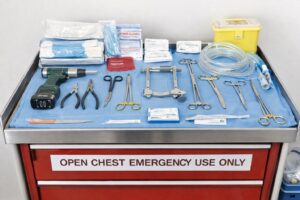
PRACTICAL TAKEAWAYS FOR THE LNC
When reviewing cases involving postoperative cardiac deterioration on step-down units, the LNC should:
1) Construct a detailed chronology of vital signs and chest tube output;
2) Identify escalation timelines clearly;
3) Review Code Blue documentation across disciplines;
4) Examine institutional policy regarding emergency resternotomy preparedness; and
5) Maintain neutral, fact-based documentation language.
CONCLUSION
Emergency resternotomy preparedness on cardiac units reflects the unique risks associated with early postoperative cardiothoracic patients. While rare, catastrophic complications such as cardiac tamponade require rapid recognition and coordinated response. For LNCs, familiarity with the clinical realities of post-cardiothoracic care – particularly chest tube monitoring, escalation pathways, and Code Blue considerations – strengthens the ability to conduct comprehensive and objective medical records review. In complex cardiac cases, clarity of documentation and understanding of the surgical context are essential components of accurate case analysis.
(Sources for this article are included in the Side Bar.)
Author: Kerri Chirchiglia, BSN, RN, BA Justice Studies, is an LNC with clinical experience in cardiothoracic and vascular surgeries, oncology surgery, pre-op and PACU, and outpatient surgery setting for eye and ear surgeries. Her work focuses on high-acuity postoperative cases and documentation review in complex medical-legal matters.
Email: kerrichirchiglia@gmail.com
_________________________________________________________________________________
CHAPTER MEMBER HIGHLIGHT
Letitia “Tish” Baggett, BS, BSN, RN, CCM, CLNC, FIG LCP-C

Letitia “Tish” Baggett is the founder, lead LNC, CEO, and life care planner at Superior Legal Nurse Consulting, PLLC. She has been recognized by Marquis Who’s Who Top Nurses for dedication, achievements and leadership in legal nurse consulting. With more than 20 years of experience to her credit, Tish’s impressive career is marked by her wealth of experience and expertise in the medical and legal fields. In her current role, she assists attorneys with medical cases by reviewing records, interpreting complex diagnoses and procedures and advising on case viability. A founder for the aforementioned consulting firm, her work further extends to preparing interrogatories for depositions or trials and creating reports that summarize medical findings to support cases effectively. Additionally, she aids in developing demonstrative evidence and takes on an extended role as a nurse life care planner, building a life care plan in particularly challenging or affecting cases to ensure clients receive adequate funds for necessary lifelong medical treatment.
Prior to her current positions, from 2017 to 2024, Tish served as an RN case manager at Centene Corporation, where her responsibilities included case management roles across California, Texas and Florida. From 2008 to 2017, she served in various roles as a charge nurse at Methodist Health System, a nurse at Baylor Medical Center at Uptown and an oncology nurse at Baylor University Medical Center.
Tish is a member of multiple professional organizations and civic-minded organizations like Doctors Without Borders and United Way Charities. She joined the Greater Orlando Chapter in 2024, and was elected as a Chapter Director at Large for 2026, where she currently serves. Tish has served as a mentor for the Greater Orlando Chapter’s LNC Launchpad, where her vast experience helps LNCs prepare for their new or expanded careers.
Tish can be reached at: tish.baggett@superiorlegalnurseconsulting.com
_______________________________________________________________________________
The American Association of Legal Nurse Consultants (AALNC) was founded in 1989, as a not for profit membership organization dedicated to the professional enhancement and growth of registered nurses practicing in the specialty of legal nurse consulting. Chapter development quickly followed. The Orlando community was rich with nurses already practicing in the field of legal nursing. This group of committed professionals quickly became members of the new national organization and recognized the need for a local chapter. The Greater Orlando Chapter of AALNC, founded in 1990, was the second chapter formed under the new national organization. The Chapter was begun in support of AALNC’s mission, by providing networking opportunities, mentoring and support to nurses through professional development and education – a mission that continues today.
CONNECT WITH US
Connect with us on LinkedIn
Check us out at: https://orlandoaalnc.org
Contact us at: info@orlandoaalnc.org

Resources for “Emergency Resternotomy Preparedness…”
1. Bojar, R.M. (2021) Manual of Perioperative Care in Adult Cardiac Surgery (6th ed.) Wiley-Blackwell.
2. The Society of Thoracic Surgeons Task Force on Resuscitation After Cardiac Surgery et al. The Annals of Thoracic Surgery, Volume 103, Issue 3, 1005-1020.
3. Carpenter M. Resuscitation after cardiac surgery: Best practice recommendations. American Nurse Journal. 2023;18(7): 14-17. doi:10.51256/anj072314 https://www.myamericannurse.com/resuscitation-after-cardiac-surgery-best-practice-recommendations/
4. Deters DR, Hunninghake J, Ruiz J, et al. (January 02, 2022) Increase Intensive Care Staff Comfort and Proficiency with Emergent Re-sternotomy in the Poast-Open-Heart Patient by Using SynDaver® Simulation. Cureus 14(1): e208975.DOI 10.7759/cureus.20875.
__________________________________
PARTY TIME!!
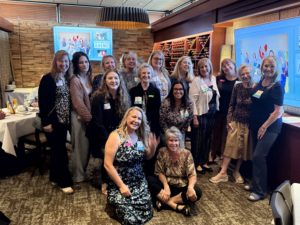 We are planning our next IN-PERSON SOCIAL EVENT, and have reserved the party room, so mark your calendars and watch for the announcement which will come out soon! Not a member of Greater Orlando Chapter? No problem, just RSVP to us at info@orlandoaalnc.org and we’ll put you on the list!
SEASONS 52
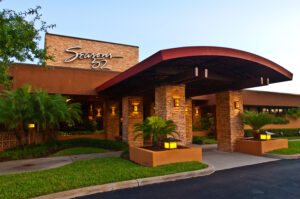
SATURDAY, SEPTEMBER 12, 2026, 12:30 – 3:00 pm
463 E. Altamonte Drive
Altamonte Springs, FL 32701
_______________________________

CALENDAR OF EVENTS
Mark your calendars for the 2026 Greater Orlando Chapter Update and CE Webinars.
-
August 18, 2026 – “Medication and Supplement Pitfalls – What LNCs Need to Know,” presented by Allison A. Muller, Pharm D., DABAT, FAACT, AFACMT.
-
September 15, 2026 – Presentation on Chemo and toxic effects, by Lakeisha Falwell, MS, NP, RN, AOCNP.
-
October 20, 2026 – “The Role of the LNC in Child Abuse Cases – Head Trauma…Part II”, presented by Beth Brant, DNP, APRN, LSN, CPNP-PC, NCSN-E, MCP-C, LNCC.
-
November 17, 2026 – “Child Abuse – Munchausen Syndrome,” presented by Jordyn Hope, BSW
Don’t forget our On-Demand Webinars. We have 21 On-Demand Webinars which are free for Chapter members and only $20 for non-Chapter members.
CONTINUING EDUCATION INFO
The Greater Orlando Chapter of AALNC is an approved provider of Nursing CE through the Florida Board of Nursing and CE Broker, and approved by the following States/District: Arkansas, District of Columbia, Florida, Georgia, Kansas, Michigan, Mississippi, New Mexico, South Carolina, Tennessee, and West Virginia. We report CE directly to CE Broker in these states. For attendees from other States, we provide required documents for self-reporting CE to State Boards of Nursing.
____________________________________
OTHER CHAPTER NEWS

Be sure to check out the AALNC calendar of events, which includes MANY events, presented by AALNC and ALL of the current and newly forming AALNC Chapters! You can fill your calendars for the remainder of 2026 – and into 2027!
And check out the education programs from our fellow AALNC Chapters:
-
Bay Area Chapter of Northern California at: https://www.bacnc.org/
-
New Jersey Chapter at: https://aalncnjchapter.clubexpress.com
-
Pittsburgh Chapter at: https://aalncpittsburgh.org
-
Tampa Bay Chapter at: https://www.aalnctampa.com/
-
Pacific Northwest Chapter at: https://www.pnw-aalnc.com/
And coming soon 4 NEW Chapters:
-
Atlanta Chapter
-
Gulf Coast Chapter
-
Greater Midwest Chapter
-
New England Chapter
_________________________________
EDUCATION, MENTORING, NETWORKING, ETC. CHECK OUT THESE AALNC EVENTS:

We’re going to beautiful San Francisco for AALNC Forum 2027, registration is open!
April 16 & 17, with Pre-Forum on April 15th.
Hyatt Regency San Francisco Downtown
50 Third Street, San Francisco, CA 94103
_________________________________

“The Course of a Case” Thursday, July 30 at 3pm ET
Join AALNC for this live webinar with a panel of LNCs experienced in different areas of the profession.
PANEL GUEST:
Independent LNC-Behind the Scenes: Jacquelyn Maki, RN, BSN, MHA, CLNC
In-House – Plaintiff: Robin Axtell, RN, BSN, LNCC
In-Houses – Defense: Tamara Karlin-Bossier, RN, LNCC
Expert Witness: Kenyetta Christmas, MSN, RN, ACNP-BC and Maureen Elia, MSN, C-EFM, RNC-OB, RNC-IAP
Each panelist will discuss their perspectives of the way they follow a case from start to finish and describe the way their roles differ from one another. Then there will be time for audience questions for the panel. The event if FREE for members and non-members.
_____________________________________

REGISTRATION IS OPEN!
AALNC Jumpstart provides a mixture of LNC practice and LNC business education and mentoring to start or grow your LNC career. The interactive virtual workshop is designed to provide LNC practice, business, and marketing tips to help attendees create a strong LNC foundation, on which to apply the nursing process to their LNC practice.
As part of this workshop, attendees will have an on-demand learning activity to attend on their own time and schedule, followed by the live, half-day virtual event. Attendees will have many opportunities to meet and interact in experiential learning with faculty, experienced LNCs, and new LNC peers.
Your 2026 Faculty includes:
Robin Axtell, BSN, RN, LNCC
Lori Mollmann, MBA, BSN, RN
Jillian Talento, BSN, RN, CEN, LNCC
Judy Young, MSN, MHL, RN, LNCC
___________________________________
LNC LAUNCHPAD – Q&A with Greater Orlando Chapter LNCs

In 2021 we started a new program for members, which we call “LNC Launchpad – Q&A with Greater Orlando Chapter LNCs.” This is a 1.5 hour session to provide guidance, answer questions, and suggestions. We limit the event to 10 participants, so we can mentor each attendee – whether new to the LNC practice or experienced and ready for a change – we are there for you! We have completed our first two 2026 sessions, and below are the remaining dates for 2026. Registration opens about 2 weeks before each session, so check our website often.
1) September 8, 2026
2) November 10, 2026
_____________________________
DID YOU ATTEND AALNC FORUM 2026 IN BEAUTIFUL ORLANDO, FLORIDA IN MARCH 2026?

If so, you know that the Greater Orlando Chapter had the privilege of being the Host Chapter. And we sponsored a drawing for some SUPER gifts! Here are the winners:
* 1-Year Chapter Membership:
Beth Brant and Mary Flanagan;
* $50 Merchandise Gift Card for AALNC
Merch Store: Pamela Taylor;
and the grand prize;
* 1-Year AALNC National
Membership….Ethel Wills!
CONGRATULATIONS TO OUR WINNERS!____________________________________
MEET THE 2026 GREATER ORLANDO CHAPTER OFFICERS & DIRECTORS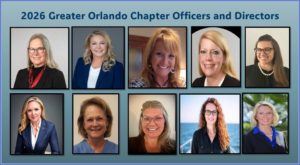
President: Michelle Gaines, MNA, RN, CRNA
President Elect: Jenelle Lea, MBA, BSN, RN, CEN, GFN-C
Immediate Past President: Robin Axtell, BSN, RN, LNCC
Secretary: Lori Mollmann, MBA, BSN, RN
Treasurer: Jillian Talento, BSN, RN, CEN, LNCC
DAL: Pamela Borello, BSN, RN, CNOR, CNAMB, CSSM(e)
DAL: Jill Campbell, BSN, RN, CPTC
DAL: Deborah Watkins, MHL, MSN, RN, CCM, CRRN, CLCP, MSCC, LNCC
DAL: Letitia “Tish” Baggett, BS, BSN, RN, CCM, CLNC, FIG LCP-C
DAL: Rebecca Edwards, MSN, BS, RN, EMT-P
__________________________________